Settlement Act of 1920
The military settlement (osadnictwo wojskowe) of the Eastern Borderlands has a permanent place in the history of the Second Republic of Poland though its effect was limited to a group of people of approximately 9,000 soldiers who served their country in the battle for independence during the period of 1914-1920. The idea of settlements in the Borderlands was born in the hot days of August 1920 and received legal backing through a bill passed by the Sejm (Parliament) on 17 December of that same year.
The original purpose of the Land Act was to ensure a buffer zone between Poland and the Soviets was created and settled with men who had not only patriotically served Poland in the Polish-Soviet War, but those with hardened battlefield experience who could be mobilised at short notice; later that became the premise by the Soviets for deportations from Kresy aimed at reducing Poland’s ability to defend itself.
Extracts from the Act of the Parliament of the Republic of Poland
ACT 1 17 December 1920
regarding acquisition of land in certain districts of the Republic of Poland into State ownership
Article 6. This Act applies in the following districts in accordance with the administrative divisions used to date:
- Brześć
- Prużana
- Wołkowysk,
- Słonin,
- Nowogródek
- Baranowicze
- Wilejka
- Dzisna
- Nieśwież
- Łuniniec,
- Pińsk
- Kobryń
- Włodzimierz
- Kowel
- Łuck
- Równe
- Dubno,
- Sarny
- Krzemieniec
- Ostroga,
- Grodno
- Lida
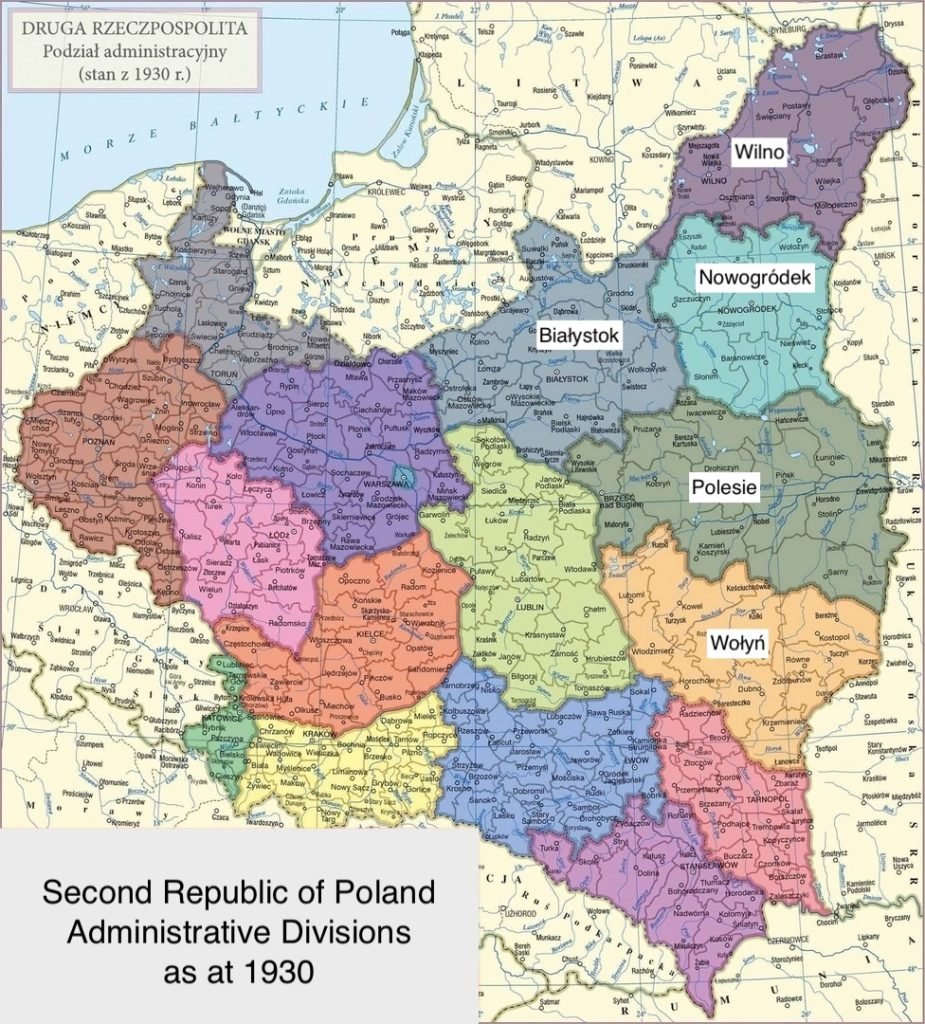
(Ed note: i.e. 5 voivodeships (Wilno, Nowogródek, Białystok, Polesie, Wołyn)
ACT 2 17 December 1920
regarding the granting of land to soldiers of the Polish Army
Article 2. The following shall be entitled to be given land given at no cost
a) war invalids and Polish army soldiers who particularly distinguished themselves,
b) volunteer soldiers to the Polish army who served on the front.
Article 3. All other invalids and soldiers capable of agricultural work may purchase land depending on availability.
Link to full texts of Act 1 and 2 (Ustawy)
The bill soon met with aggressive opposition in the Sejm as well as attacks from the press. Various groups that criticized this legislation, which was supported by Józef Piłsudski, (Marshal Piłsudski was Military dictator of Poland at the time) saw in the military settlement of the Borderlands a threat to their political and/or economic agendas.
This law ended on 28 Dec 1923. A new law in March 1932 gave ex-soldiers the priority in purchasing land. Settlers in the 2 southern voivodeships were those who purchased land after 1932 in the framework of the land reform and officially were recognised as “cywilne osady”, civilian settlements, often called “kolonie”.
The living conditions of the settlers were extremely difficult in the first few years. The plots that were granted them were often overgrown with weeds and generally devastated by war and with no buildings on them. The settlers often lacked the most primitive agricultural tools and equipment at a time when soldiers’ pockets were empty.
With the passage of time, the situation of the soldiers improved. By the 1930s, articles in the newspapers assessed the accomplishments of the settlers and their positive role in the Borderlands favourably and sometimes even enthusiastically. In the east where many ethnic groups such as Poles, Ukrainians, Belarusians and Jews, as well as other smaller minorities came together as in a crucible, the settlers managed to coexist with the local population based on the principle of being good neighbours, rather than the relationship of “Polish Lord” to the Ukrainian or Belarusian “Peasant”.
The invasion by the Soviets onto Polish territory destroyed the Settlement of the Borderlands movement. The settlers and their families, with few exceptions, were forcibly deported into the heart of the inhuman Soviet land where they were decimated by disease and hunger. Some of them escaped to the free world in 1942 with the army of General Anders, but most of them only returned to their homeland after the end of the war. The settlers and their children were scattered all over the world.
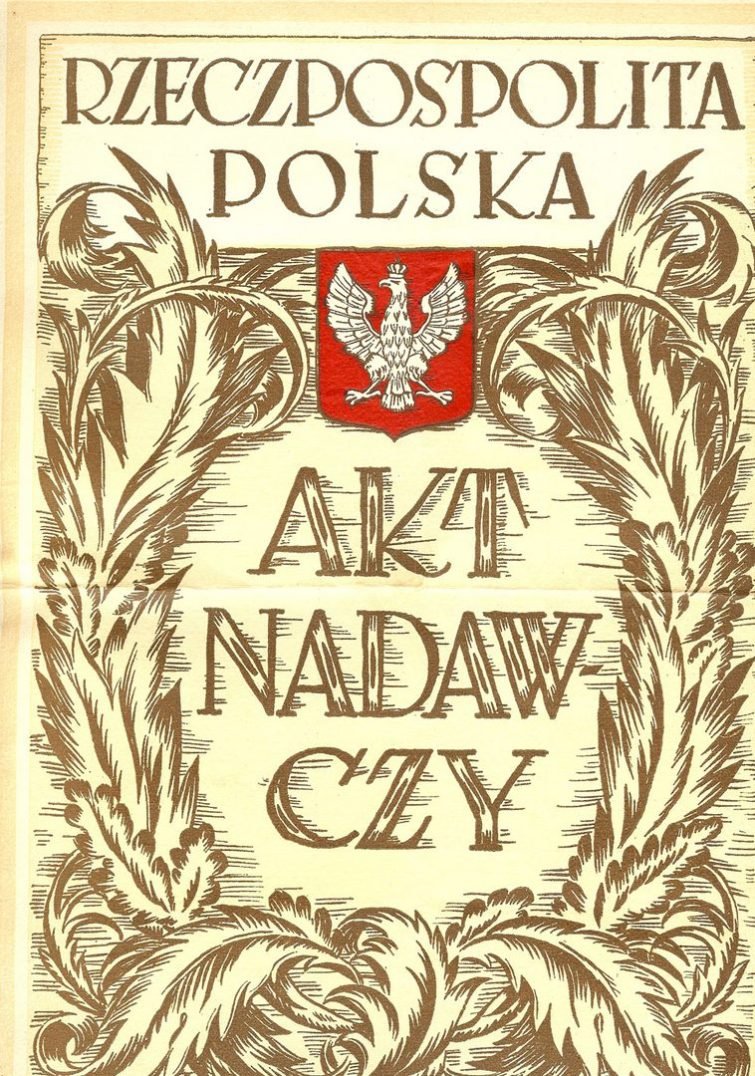
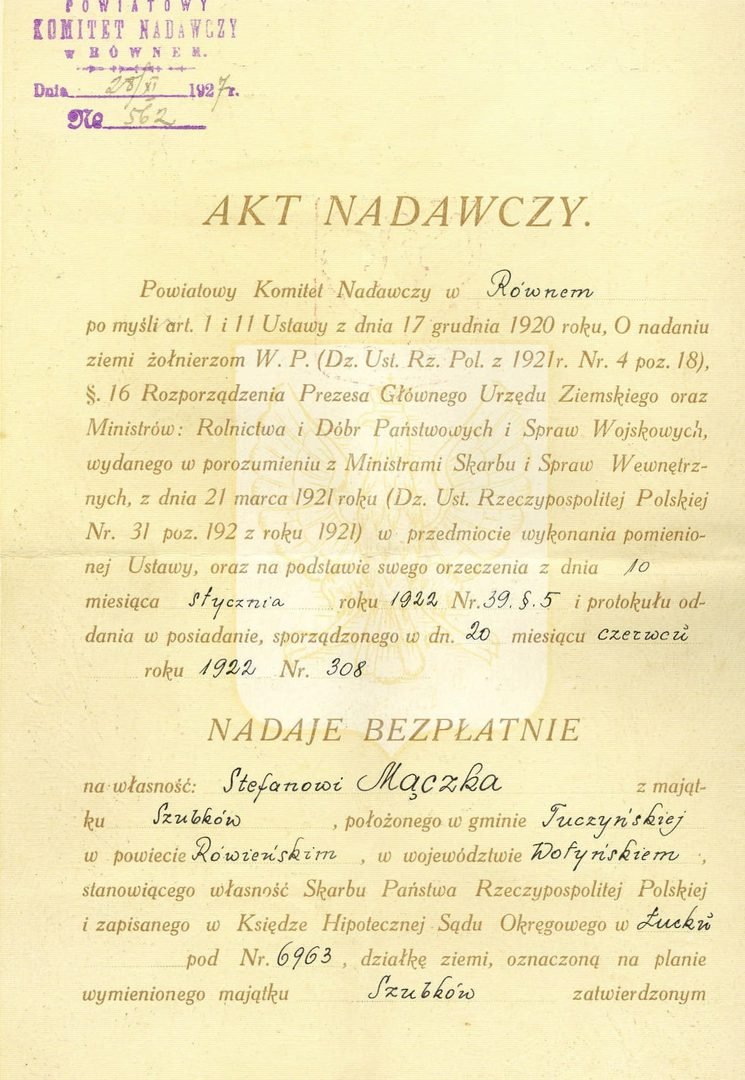
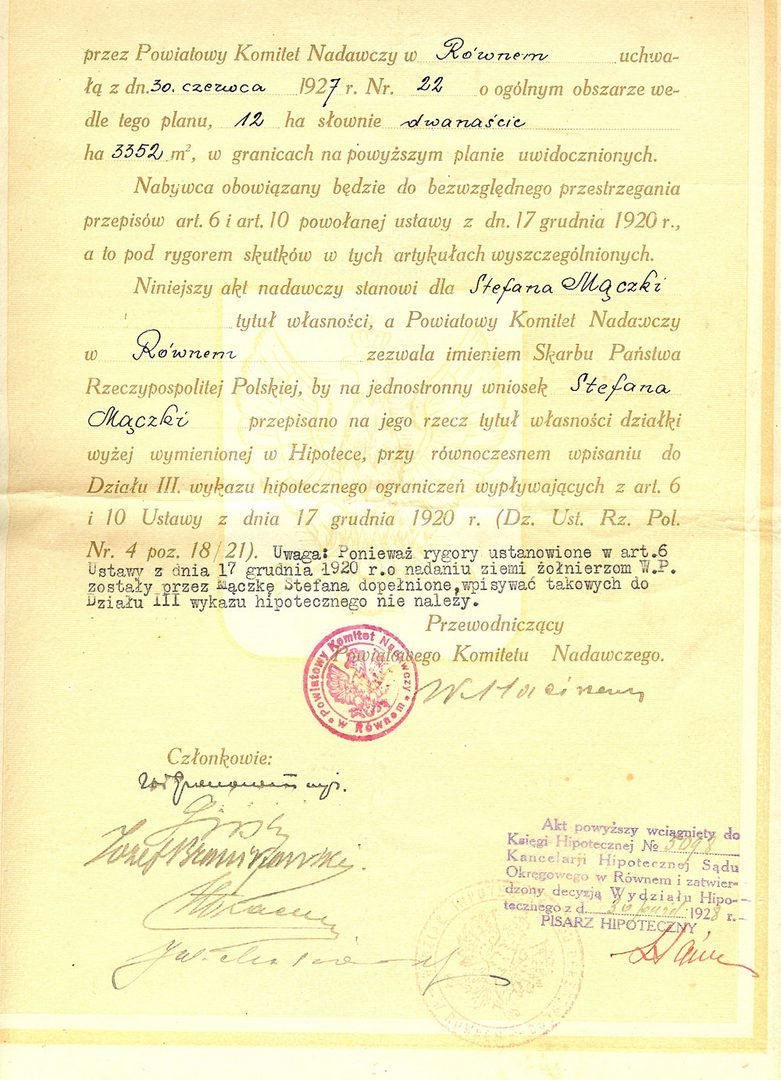
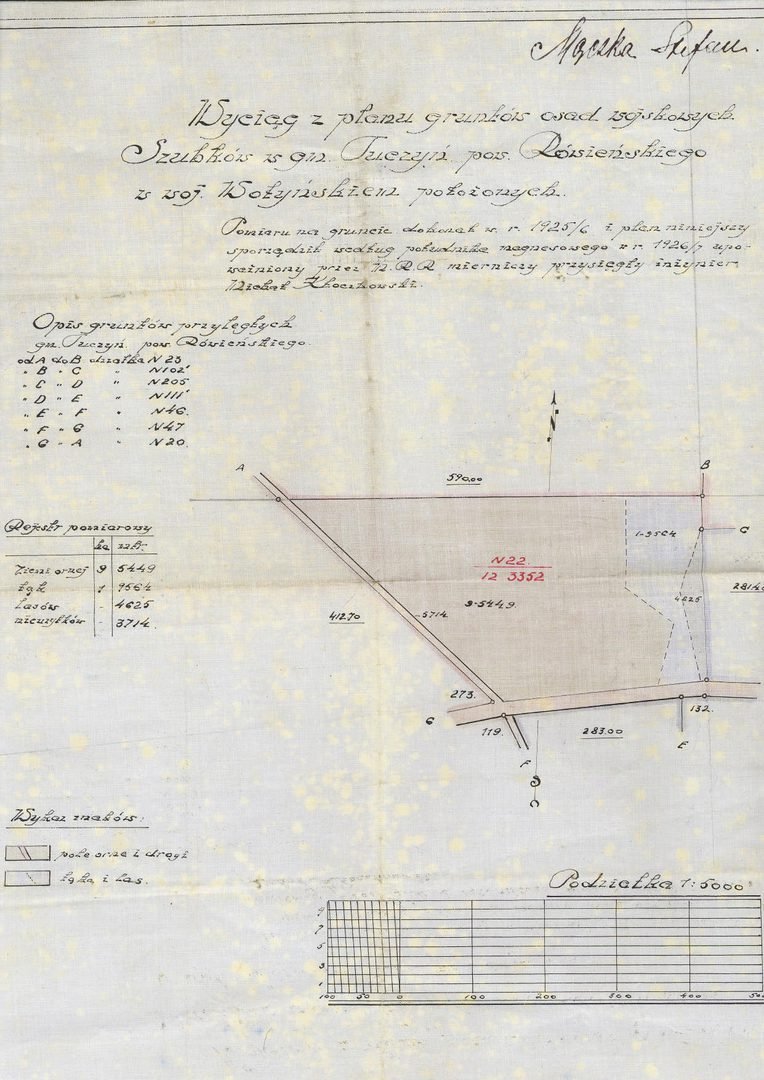
Example of an official Deed of Grant issued 30 October 1928
(Click to enlarge)